


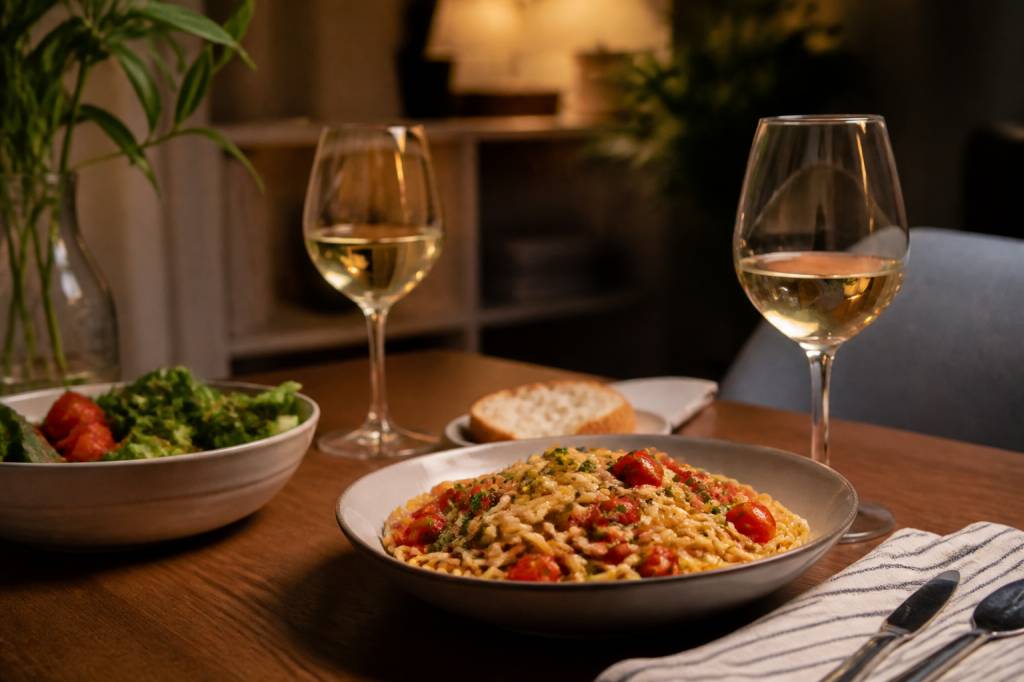
There are evenings when cooking feels like exactly what you need—and others when the thought of chopping, stirring and washing up sounds like a full-time job. That is where a good 20-minute dinner earns its place. Add the right bottle of wine, and even a rushed Tuesday can feel surprisingly civilised.
These are the meals I make when I want something quick, satisfying and just a little bit special. No complicated techniques, no shopping list that requires a second mortgage, and no need to open a dozen bottles. Each recipe is designed around a simple wine pairing, because dinner tastes better when the glass beside it makes sense.
A small piece of advice from my years behind the bar: do not overthink the pairing. You are looking for harmony, not a wine exam. Match the weight of the wine to the weight of the dish, keep acidity in mind, and remember that the bottle should make you want another bite.
Creamy lemon pasta with peas and Sauvignon Blanc
This is the emergency dinner I return to again and again. It uses ingredients that are easy to keep in the cupboard or freezer, comes together in the time it takes to boil the pasta, and tastes far more polished than the effort involved suggests.
For two people:
- 200 g spaghetti, linguine or tagliatelle
- 150 g frozen peas
- 1 lemon
- 2 garlic cloves, finely sliced
- 100 ml crème fraîche or double cream
- 40 g grated Parmesan
- Olive oil, salt and black pepper
Boil the pasta in well-salted water. Add the peas during the final two minutes of cooking. Before draining, reserve a mugful of pasta water—this is the secret to a glossy sauce rather than a heavy one.
Warm a splash of olive oil in a frying pan and gently cook the garlic for a minute. Add the crème fraîche, lemon zest and a squeeze of lemon juice. Toss in the pasta and peas, then loosen everything with a little pasta water. Finish with Parmesan, plenty of black pepper and another squeeze of lemon if needed.
The wine pairing is a crisp Sauvignon Blanc, ideally one with bright citrus and herbal notes. Its acidity cuts through the cream, while the green, fresh character works beautifully with the peas and lemon. A Loire Sauvignon Blanc will feel mineral and elegant; a New Zealand version will bring more tropical fruit and aromatic lift.
Quick upgrade: Add smoked salmon, cooked prawns or a handful of fresh herbs. Dill is particularly good here. And if you are opening the wine while cooking, remember to keep the glass away from the pasta water. I have learned this one the messy way.
Spicy tomato prawns with chilled rosé
Prawns are brilliant for speedy dinners because they cook in minutes. The trick is not to leave them in the pan too long. Once they turn pink and curl gently, they are ready. Anything beyond that and they can become disappointingly chewy.
For two people:
- 250 g raw peeled prawns
- 1 tin chopped tomatoes
- 2 garlic cloves, crushed
- 1 small onion or 2 shallots, finely chopped
- 1 teaspoon smoked paprika
- A pinch of chilli flakes
- Fresh parsley or coriander
- Crusty bread, couscous or rice to serve
Soften the onion in olive oil for three minutes, then add the garlic, paprika and chilli flakes. Pour in the tomatoes and simmer for five minutes, allowing the sauce to reduce slightly. Add the prawns and cook for three to four minutes, turning once, until just cooked through. Finish with herbs and a drizzle of olive oil.
This dish is made for a dry rosé served properly chilled. Look for one with enough freshness to handle the tomato and enough fruit to soften the chilli. A Provence-style rosé will keep things delicate and crisp, while a rosé from Spain or southern France may bring a little more body and ripe red-fruit character.
Serve it with bread for scooping up the sauce, because leaving that sauce behind should frankly be illegal. If you prefer something more substantial, spoon the prawns over couscous, which cooks in about five minutes and absorbs all those smoky juices.
Wine tip: Avoid very sweet rosé with spicy food. A touch of fruit is welcome, but excessive sweetness can make the chilli taste hotter and the tomato taste flat.
Halloumi and roasted vegetable flatbreads with Albariño
When I want a meat-free dinner that still feels generous, halloumi is one of my favourite shortcuts. It brings salt, texture and enough personality to make a plate of vegetables feel like a proper meal rather than an apology.
For two people:
- 2 large flatbreads or naan breads
- 200 g halloumi, sliced
- 1 red pepper, sliced
- 1 courgette, sliced into half-moons
- 1 small red onion, sliced
- Greek yoghurt
- Half a lemon
- Mint, parsley or coriander
Heat the oven or grill to a high temperature. Toss the pepper, courgette and onion with olive oil, salt and pepper, then roast for 12 to 15 minutes. Add the halloumi for the final five minutes, turning it once so both sides become golden.
Warm the flatbreads and spread them with Greek yoghurt mixed with lemon juice, salt and chopped herbs. Pile on the roasted vegetables and halloumi. A spoonful of harissa or chilli crisp is optional but highly recommended if you like a little heat.
Albariño is a terrific partner here. It is fresh, lightly saline and naturally suited to salty cheese. The wine’s citrus and stone-fruit notes lift the grilled vegetables, while its acidity keeps the yoghurt sauce feeling bright rather than heavy.
If you cannot find Albariño, try Picpoul de Pinet, Assyrtiko or an unoaked Chardonnay. The important thing is freshness. A big, buttery white would overpower the dish and make the halloumi seem even saltier.
Time-saving move: Use pre-cut vegetables if you are truly short on time. Dinner does not become less virtuous because somebody else sliced the courgette.
Chorizo, white bean and spinach skillet with Rioja
This is a one-pan dinner with serious comfort-food energy. The beans make it filling, the spinach brings freshness and the chorizo does most of the flavour work for you. It is ready in around 20 minutes and produces very little washing up, which is a pairing I personally enjoy more than any wine.
For two people:
- 150 g cooking chorizo, sliced
- 1 tin cannellini or butter beans, drained
- 1 red onion, sliced
- 2 garlic cloves, chopped
- 200 ml chicken or vegetable stock
- Two large handfuls of spinach
- 1 teaspoon smoked paprika
- Crusty bread to serve
Cook the chorizo in a large frying pan until it releases its red, smoky oil. Add the onion and cook for three minutes, followed by the garlic and paprika. Stir in the beans and stock, then simmer for five to seven minutes until the liquid reduces and the beans are hot. Fold through the spinach until wilted.
A young Rioja is a natural match. Look for a Crianza or a unoaked Rioja with bright cherry fruit, gentle spice and moderate tannin. The wine echoes the chorizo’s smoky warmth without making the meal feel too heavy. If your dish is particularly spicy, choose a fruitier red with softer tannins.
Serve with toasted bread rubbed with garlic. For an extra layer of richness, add a fried egg on top. The runny yolk turns the sauce into something dangerously good.
Alternative pairing: A dry Spanish rosé works beautifully if you prefer a lighter glass. It will refresh the palate and keep the dish feeling more weeknight-friendly.
15-minute miso salmon with Riesling
Salmon cooks quickly, and a miso glaze gives it instant depth. This is the kind of dinner that looks as though you planned ahead, even when you absolutely did not.
For two people:
- 2 salmon fillets
- 1 tablespoon white miso
- 1 tablespoon soy sauce
- 1 teaspoon honey or maple syrup
- 1 teaspoon sesame oil
- 1 lime
- Microwave rice or quick-cooking rice
- Steamed greens to serve
Mix the miso, soy sauce, honey, sesame oil and a squeeze of lime. Place the salmon on a lined baking tray and brush generously with the glaze. Roast at 200°C for 10 to 12 minutes, depending on the thickness of the fillets. The top should be caramelised and the centre still moist.
While the salmon cooks, prepare rice and steam broccoli, pak choi or sugar snap peas. Finish the plate with sesame seeds, sliced spring onions and another squeeze of lime.
Choose an off-dry Riesling, either from Germany or Alsace. Its acidity is excellent with salmon, while a slight touch of sweetness balances the salty miso and soy. This is one of those pairings where the wine can make the sauce taste less intense and more rounded.
A dry Riesling will work too, especially if you add chilli or keep the glaze relatively restrained. Avoid heavily oaked Chardonnay here; the combination of oak, salmon and miso can become a little too rich.
Warm mushroom toast with Pinot Noir
For a dinner that feels simple but grown-up, mushrooms on toast are difficult to beat. Use a mixture of mushrooms if you can, but ordinary chestnut mushrooms are perfectly good. The key is to cook them in a wide pan so they brown rather than steam.
For two people:
- 400 g mushrooms, sliced
- 2 thick slices of sourdough per person
- 1 shallot, finely chopped
- 1 garlic clove
- 1 tablespoon butter
- A splash of white wine or vegetable stock
- Fresh thyme
- Soft goat’s cheese or crème fraîche, optional
Toast the sourdough while you cook the mushrooms. Melt the butter in a large frying pan, add the shallot and cook for two minutes. Turn up the heat, add the mushrooms and leave them undisturbed for a couple of minutes so they develop colour. Stir in the garlic and thyme, then add a splash of white wine or stock. Cook until glossy and concentrated.
Spoon the mushrooms over the toast and finish with goat’s cheese, crème fraîche or a fried egg. A little lemon zest at the end stops the dish from feeling too earthy.
Pinot Noir is a lovely match because it is light enough for mushrooms but earthy enough to echo their savoury character. Choose a fresh, not overly oaky bottle. A Burgundy Pinot Noir will be delicate and woodland-like; a cooler-climate New World Pinot may bring brighter cherry fruit.
If you would rather drink white wine, try a lightly oaked Chardonnay or a dry Chenin Blanc. Both have enough texture for the toast and enough acidity to keep the butter in check.
How to make a 20-minute dinner feel effortless
The fastest dinners are not necessarily about moving at frantic speed. They are about doing the right things in the right order. Before turning on the hob, read the recipe once and take out everything you need. This tiny bit of preparation saves more time than rushing around looking for the paprika halfway through cooking.
- Start with the longest ingredient: pasta water, rice or the oven.
- Use frozen peas, pre-washed spinach and tinned beans without guilt.
- Keep lemons, garlic, Parmesan, eggs and good bread in the kitchen at all times.
- Open the wine before dinner, but give it a few minutes to settle.
- Serve the same wine in the food when appropriate, especially for pan sauces.
- Taste before serving. Salt, acid and fresh herbs can transform a rushed meal.
And what about leftovers? Most of these dishes are even better the next day, particularly the bean skillet, tomato prawns and roasted vegetables. Store them properly, chill the wine, and suddenly tomorrow’s lunch has already been handled.
A 20-minute dinner does not have to mean eating over the sink with one hand. Put the plates on the table, pour the wine into proper glasses and add one small finishing touch—fresh herbs, lemon zest, a drizzle of olive oil. That is often all it takes to turn a quick meal into an evening worth lingering over.