


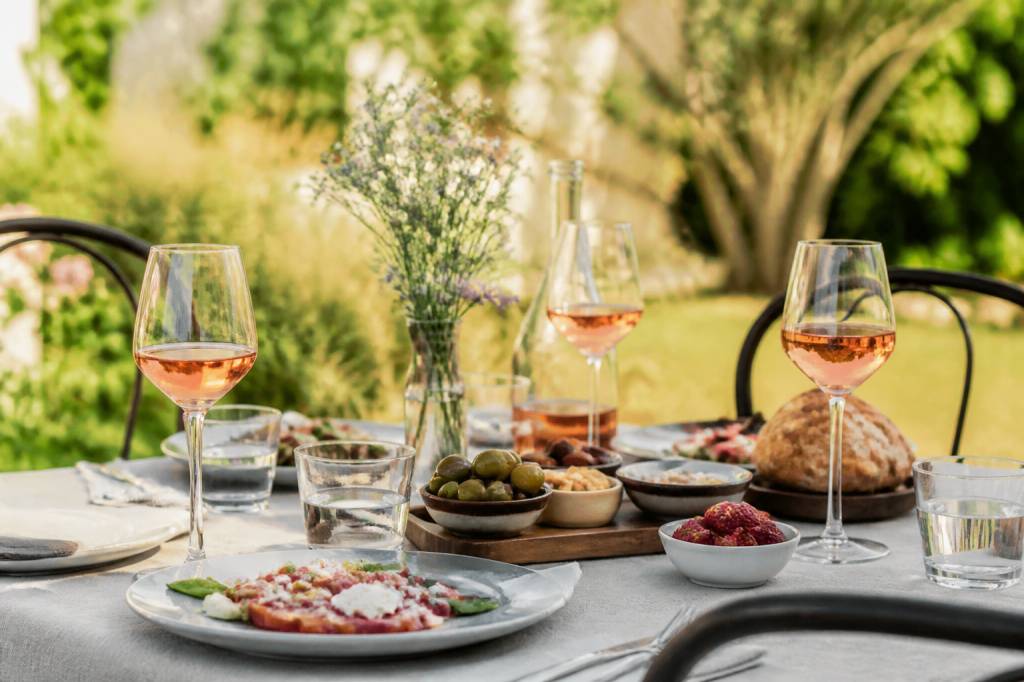
There is something wonderfully uncomplicated about eating outside. A table in the garden, a few friends, food in the middle, and a drink cold enough to make everyone forget who was supposed to bring the napkins. But alfresco dining has its own rules, especially when it comes to pairing drinks with food.
Warm weather changes the way we eat and drink. We want lighter dishes, brighter flavours, plenty of ice and cocktails that can be prepared without turning the host into a full-time bartender. The good news? You do not need a complicated wine list or a bar stocked like a five-star hotel. A few well-chosen bottles, fresh ingredients and the right combinations are more than enough.
Here are my favourite food and drink pairings for an outdoor meal, from a relaxed picnic lunch to a late dinner under the stars.
Start with the golden rules of outdoor pairings
Before reaching for the shaker, think about the food you are serving. Outdoor meals are often generous, colourful and full of contrasting flavours: salty olives, creamy burrata, smoky barbecue, sharp sauces, fresh herbs and ripe fruit. Your drinks should refresh the palate rather than compete with every bite.
-
Keep the alcohol moderate. Long lunches and hot weather are not the moment for three stiff Negronis before the main course.
-
Prioritise freshness. Citrus, herbs, tonic, soda and dry wines work beautifully outside.
-
Think about temperature. Ice is not decoration. It keeps cocktails balanced and wine pleasant.
-
Choose practical serves. Pitcher cocktails, spritzes and chilled wines are much easier than drinks that need individual attention.
-
Match intensity. Delicate dishes need delicate drinks, while grilled meats and spicy food can handle bolder flavours.
One final tip from behind the bar: never underestimate the power of sparkling water. It can lengthen a drink, refresh the palate and keep the afternoon going at a civilised pace.
For aperitif: bubbles, olives and salty snacks
The aperitif is where alfresco dining really begins. Guests arrive, someone opens the crisps before the plates are ready, and suddenly the table is surrounded by glasses. This is the perfect moment for sparkling wine.
A dry Prosecco, Crémant or Champagne works beautifully with salty snacks, fried appetisers, gougères, marinated olives and soft cheeses. The bubbles lift the richness, while the acidity keeps everything feeling fresh. If you are serving oysters or prawns, a crisp sparkling wine is almost impossible to beat.
For something even more relaxed, try a Hugo Spritz. It is floral, minty and lower in intensity than many classic aperitivo cocktails.
-
40 ml elderflower liqueur
-
90 ml Prosecco or another dry sparkling wine
-
30 ml soda water
-
Fresh mint and a lime wedge
Build everything in a large wine glass filled with ice, stir gently and add plenty of mint. Serve it with goat’s cheese, cucumber bites, feta, or anything involving a generous amount of salted butter. It is the sort of drink that makes people say, “I’ll just have one,” before quietly ordering another.
Fresh salads call for crisp white wine
Not all salads are light. A salad with grilled peaches, burrata and prosciutto has more richness than it lets on, while a Caesar salad brings creaminess, salt and umami. The drink needs enough acidity to cut through the dressing, but enough flavour to stand up to the ingredients.
For leafy salads, seafood salads and dishes with citrus-based dressings, choose a crisp white wine such as Sauvignon Blanc, Albariño, Picpoul de Pinet or Muscadet. These wines are lively, refreshing and generally happy to be served well chilled.
With a tomato salad, look for a wine with freshness and a little texture. A dry rosé from Provence is an easy choice, but a chilled Vermentino or a light, juicy red served slightly cool can also work well.
My personal favourite for a sunny lunch is a dry rosé with a salad of ripe tomatoes, peaches, basil and creamy mozzarella. The wine echoes the fruit, the acidity keeps the cheese in check, and the whole combination tastes like summer without trying too hard.
Grilled vegetables and halloumi: bring on the rosé
Vegetables cooked over a barbecue develop smoky, caramelised edges. Courgettes, aubergines, peppers, asparagus and corn all benefit from a drink with fruit and freshness. This is where rosé earns its place at the table.
Choose a dry rosé rather than something overly sweet. Look for notes of red berries, citrus and herbs. A rosé from Provence, Tavel or Navarra can handle grilled vegetables, herby sauces and salty halloumi without becoming flat.
Halloumi deserves a special mention. Its salty, chewy texture loves fruit-driven drinks, particularly rosé or a chilled light red. You could also serve a watermelon and feta cooler alongside it for a non-wine option.
-
4 cubes of watermelon
-
25 ml fresh lime juice
-
15 ml agave syrup, optional
-
50 ml blanco tequila or white rum
-
Soda water and plenty of ice
Muddle the watermelon gently with lime juice, add the spirit and ice, then shake. Strain into a tall glass over fresh ice and top with soda. Garnish with mint. The result is bright, juicy and not too heavy with smoky food.
Seafood and citrus cocktails
Grilled prawns, crab, ceviche, fish tacos and oysters all love citrus. The trick is to keep the drink dry and refreshing. Sweet cocktails can make seafood taste metallic, so save the syrup-heavy creations for dessert.
A classic Tommy’s Margarita is a brilliant match for fish tacos or grilled prawns. It has enough acidity to cut through fried elements, while the tequila brings a little earthy depth.
-
50 ml blanco tequila
-
25 ml fresh lime juice
-
15 ml agave syrup
-
Salt for the rim, optional
Shake with ice and strain over fresh ice in a rocks glass. I prefer a half salt rim rather than coating the entire glass. It gives you control over every sip and avoids turning the drink into a salt lick.
If you want something lighter, serve an Albariño, Chablis or dry Riesling. These wines are excellent with shellfish, especially when the food includes herbs, cucumber or a touch of chilli.
Barbecue favourites need a drink with character
Barbecue food brings smoke, char, spice and plenty of sauce. A fragile white wine may disappear next to a sticky burger or a rack of ribs, so this is the moment for reds with fruit and moderate tannins.
For burgers, sausages and grilled chicken, try a juicy Grenache, a young Syrah, a Malbec or a chilled Beaujolais. Serve the wine slightly cooler than room temperature. Around 14 to 16°C is often ideal, especially when the garden is warm.
With barbecue ribs or pulled pork, look for a red with ripe fruit and enough structure for the sauce. A Zinfandel or Australian Shiraz can work wonderfully, particularly with smoky, sweet marinades.
For guests who prefer cocktails, a Dark ’n’ Stormy brings spice and freshness without being too delicate.
-
50 ml dark rum
-
15 ml fresh lime juice
-
Ginger beer to top
-
Ice and a lime wedge
Build it in a tall glass over ice. Add the lime, ginger beer and rum, then stir gently. The ginger works particularly well with grilled pork, spicy chicken and anything brushed with barbecue sauce.
Spicy food needs refreshment, not competition
Chilli can make drink pairing surprisingly tricky. High alcohol increases the sensation of heat, while tannic reds can taste harsh. For spicy dishes, choose wines with freshness, a little sweetness or plenty of fruit.
A lightly off-dry Riesling is a classic choice for spicy noodles, Thai salads and chilli prawns. Gewürztraminer can also work with aromatic dishes, especially those featuring ginger, coriander and coconut.
For a cocktail, go for a Paloma. Its grapefruit bitterness and soda make it refreshing, while tequila gives it enough personality for grilled meat and spicy tacos.
-
50 ml blanco tequila
-
15 ml fresh lime juice
-
Grapefruit soda to top
-
A pinch of salt, optional
Build over ice and stir. If you cannot find grapefruit soda, combine fresh grapefruit juice with soda water and a little agave syrup. It is less sweet and tastes wonderfully fresh.
Cheese boards: choose by texture and intensity
A cheese board can appear at any point during an outdoor meal, which is one of the reasons I fully support them. They are generous, flexible and require very little cooking. The challenge is choosing one drink for several different cheeses.
If your board includes soft cheeses such as Brie, Camembert or triple cream, serve a sparkling wine or a lightly chilled Chardonnay. The acidity refreshes the palate after each creamy bite.
Goat’s cheese loves Sauvignon Blanc, Sancerre and dry rosé. Blue cheese is more demanding and often prefers something with sweetness, such as a late-harvest wine, Port or Sauternes.
For a mixed board with hard cheeses, cured meats and chutney, a medium-bodied red is usually the safest option. A Côtes-du-Rhône, Rioja Crianza or Italian Barbera will bring enough fruit and acidity without overwhelming everything.
Want a cocktail? Keep it simple. A vermouth and tonic with an orange twist is low in alcohol, pleasantly bitter and excellent with salty snacks and mature cheese.
Picnic pairings that travel well
Picnic drinks need to be sturdy, portable and easy to serve. Leave the delicate garnish and complicated shaking at home. Good options include cans of sparkling wine, screw-cap bottles, premixed spritzes and cocktails that can be made in advance.
For sandwiches, quiche, roasted vegetables and cold chicken, try:
-
Dry rosé with ham, soft cheese and tomato sandwiches
-
Chilled Pinot Noir with roast beef or mushroom sandwiches
-
Vinho Verde with egg salad, seafood or cucumber
-
Hard cider with pork, cheddar and picnic pies
-
Ginger beer with spicy wraps and falafel
A batch of white sangria is another excellent picnic companion. Combine a dry white wine, sliced peaches, green apple, lemon and a splash of soda. Add a little elderflower liqueur if you want more fragrance. Prepare it a few hours ahead, but add the soda just before serving so it stays lively.
Dessert deserves more than a final glass of whatever is left
Outdoor desserts tend to be fruit-led: pavlova, grilled peaches, strawberries, lemon tart or ice cream. Match them with drinks that are fresh and aromatic rather than aggressively sweet.
A Moscato d’Asti is lovely with fresh fruit and light pastries. A chilled rosé sparkling wine works with berries, while a sweet Riesling is a natural partner for lemon desserts.
For grilled peaches or nectarines, serve a lightly chilled dessert wine or make a simple peach Bellini. Blend ripe peach with a little lemon juice, pour into glasses and top with chilled Prosecco. It is elegant, easy and dangerously drinkable.
If chocolate is on the menu, move towards richer drinks: ruby Port, Pedro Ximénez Sherry, coffee cocktails or a stout. And yes, an espresso martini can work outdoors. Just perhaps not after you have spent three hours in the sun.
Make the drinks easy on yourself
The best outdoor host is not the person shaking cocktails all evening. It is the person who gets to sit down and eat. Prepare as much as possible in advance.
-
Chill wines several hours before guests arrive.
-
Make syrups, juices and garnishes ahead of time.
-
Pre-batch cocktails that do not contain sparkling ingredients.
-
Keep a large container of ice available. You will need more than you think.
-
Label pitchers clearly, especially when one contains alcohol and another does not.
-
Offer at least one genuinely good alcohol-free option, not just warm tap water with a lemon slice.
For an alcohol-free serve, combine cucumber, lime, mint, tonic and soda over ice. Or mix chilled hibiscus tea with grapefruit juice and sparkling water. These drinks have colour, bitterness and freshness, so nobody feels they have been handed a consolation prize.
The ideal alfresco drinks table
If I were setting up one relaxed outdoor meal, I would keep the selection simple: a bottle of sparkling wine for the aperitif, a dry rosé for salads and grilled vegetables, a light red for the barbecue, and one pitcher cocktail such as Palomas or white sangria. Add plenty of sparkling water, citrus wedges and ice.
That is enough choice to keep everyone happy without turning dinner into a drinks tasting. After all, the best pairing is the one that lets the food shine, keeps the conversation flowing and gives the host time to enjoy the meal too.