

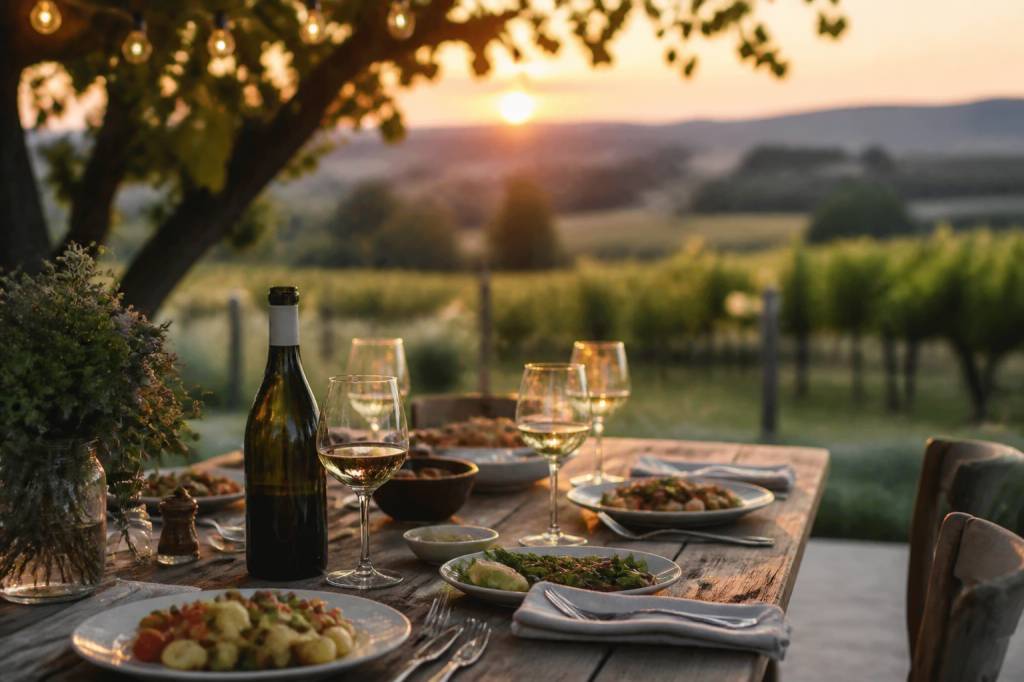
There is something wonderfully simple about an al fresco dinner. A table outside, a few candles, food passed around without ceremony, and a bottle that seems to taste better under the open sky. You do not need a garden worthy of a design magazine or a table covered in linen. A balcony, a courtyard, or a small patch of grass will do nicely.
The trick is to keep the food elegant but relaxed, and the wine generous enough to work with a whole meal rather than just one carefully staged bite. After years behind a bar, I have learned that the best outdoor dinners are not the ones with the most complicated menus. They are the ones where the host is sitting down with everyone else.
So here is a practical menu for a memorable evening outside: bright seasonal ingredients, recipes that can be prepared ahead, and wine pairings that make sense without turning dinner into a certification exam.
Start with the right al fresco mood
Before thinking about recipes, think about the rhythm of the evening. Outdoor dinners work best when guests can nibble as they arrive, then move naturally towards a proper meal. Avoid dishes that need constant last-minute attention. Nobody wants to be whisking a sauce while their guests are admiring the sunset without them.
Set up a generous opening spread with things that can sit happily at room temperature:
- Warm sourdough or focaccia, sliced before guests arrive
- Marinated olives with orange zest and rosemary
- A creamy dip such as whipped ricotta or hummus
- Seasonal vegetables, grilled or roasted
- A small plate of cured meat or cheese
For the table, keep it unfussy. A large wooden board, colourful napkins, sturdy wine glasses and a few low candles are more than enough. Avoid tall decorations that block conversation. The prettiest centrepiece is often a bowl of tomatoes, peaches or lemons.
And please, chill more wine than you think you need. Warm white wine is one of summer’s least charming surprises.
Welcome drink: a light spritz with a Mediterranean accent
For the first drink, I like something refreshing but not too strong. Guests may be arriving warm, hungry and ready to talk, so this is not the moment for an aggressively boozy cocktail.
Try a simple rosemary and grapefruit spritz. It has enough bitterness to wake up the palate and enough freshness to work with salty snacks.
- 45 ml gin
- 60 ml fresh grapefruit juice
- 15 ml rosemary syrup
- 90 ml chilled sparkling wine
- A splash of soda water
- Grapefruit peel and rosemary to garnish
To make rosemary syrup, gently heat equal parts sugar and water with a sprig or two of rosemary until the sugar dissolves. Let it cool, then strain. Build the cocktail over plenty of ice in a large wine glass and stir gently.
If you prefer a lower-alcohol option, leave out the gin and add a little extra soda. The drink will still be aromatic, bright and very easy to sip. Serve it with olives, salted almonds and a few slices of focaccia.
First course: grilled peaches, burrata and basil
This is the sort of dish that looks impressive while requiring almost no drama. The combination of sweet peaches, creamy burrata, peppery leaves and fresh basil feels elegant, but the preparation is wonderfully straightforward.
Choose peaches that are ripe but still firm enough to hold their shape. Cut them in half, remove the stones and brush the cut sides with a little olive oil. Grill them over medium-high heat for two to three minutes per side, just until they show clear marks and soften slightly.
Arrange the warm peaches around one or two balls of burrata. Add basil leaves, rocket or watercress, toasted hazelnuts and a little flaky salt. Finish with extra virgin olive oil and a few drops of balsamic vinegar. You can also add a teaspoon of honey if your peaches are not particularly sweet.
The key is contrast: warm and cool, creamy and crisp, sweet and savoury. It is a dish that proves summer cooking does not need a long ingredient list.
Wine pairing: dry rosé or fresh white
A dry rosé is an easy and delicious match here, especially one with notes of red berries, citrus and herbs. Look for a Provence-style rosé, a dry rosado from Spain or a pale rosé from southern France. Avoid anything too sweet, which can make the peaches taste flatter and the burrata feel heavy.
If you prefer white wine, choose something fresh with enough acidity to cut through the cheese. Sauvignon Blanc works well, as does an unoaked Chardonnay or a crisp Italian Vermentino. Serve the wine cool, but not ice-cold. Excessive chilling hides the aromas and gives the wine all the personality of a refrigerator.
Main course: lemon and herb chicken with grilled vegetables
For the main course, grilled chicken is a reliable choice, but it deserves more attention than a quick brush of barbecue sauce. A simple marinade of lemon, garlic and herbs gives you juicy, fragrant meat with enough flavour to stand up to wine.
For four people, combine:
- 4 boneless chicken thighs or 4 chicken breasts
- 3 tablespoons of olive oil
- The zest and juice of 1 unwaxed lemon
- 2 crushed garlic cloves
- 1 teaspoon of dried oregano
- A handful of chopped parsley or thyme
- Salt and freshly ground black pepper
Marinate the chicken for at least 30 minutes, or for several hours in the refrigerator. Take it out about 20 minutes before cooking so it loses some of its chill. Grill over medium heat until golden and cooked through. Chicken thighs are particularly forgiving and stay juicy, which is useful when you are also trying to keep an eye on your guests, the music and the wind blowing napkins across the garden.
Let the chicken rest for five minutes before serving. This small pause makes a real difference. Slice it just before bringing it to the table and spoon over any resting juices.
For the vegetables, use whatever looks best at the market. Courgettes, peppers, aubergines, spring onions and asparagus are all excellent on the grill. Toss them with olive oil, salt and pepper, then finish with lemon juice and fresh herbs. A few crumbled feta cubes or shavings of parmesan can turn the vegetables into a more substantial side dish.
Make a sauce to bring everything together
A good sauce makes grilled food feel considered rather than merely grilled. My favourite for this menu is a quick green herb dressing inspired by salsa verde.
- 1 large handful of parsley
- 1 small handful of basil or mint
- 1 tablespoon of capers
- 1 small garlic clove
- 1 teaspoon of Dijon mustard
- 3 tablespoons of olive oil
- 1 tablespoon of lemon juice
- Salt and pepper
Chop everything finely or pulse briefly in a food processor. The sauce should remain textured, not completely smooth. Taste it before serving and adjust the acidity. If it feels too sharp, add a little more olive oil. If it tastes dull, it probably needs another pinch of salt or a squeeze of lemon.
This sauce can be made several hours ahead and kept covered in the refrigerator. Bring it back to room temperature before serving so the flavours can open up.
Wine pairing: Sauvignon Blanc, Vermentino or light red
With lemon and herb chicken, acidity matters. A lively Sauvignon Blanc will echo the citrus and herbs, while a Mediterranean Vermentino brings notes of lemon peel, white flowers and salty minerality. Both are excellent choices for a warm evening.
You can also serve a light red wine, particularly if your vegetables are deeply charred. Look for a chilled Gamay, a young Pinot Noir or a fresh Mencía. Put the bottle in the refrigerator for 20 to 30 minutes before serving. Light reds benefit from a gentle chill, especially outdoors.
One useful trick is to serve the white wine with the first course, then bring out the red once the chicken arrives. If you would rather keep things simple, Vermentino is versatile enough to accompany the whole meal.
A vegetarian main: roasted tomato and ricotta tart
If you are feeding vegetarian guests, or simply want an alternative to the grill, a tomato and ricotta tart is beautiful served warm or at room temperature. That makes it particularly useful for outdoor entertaining.
Use a sheet of good-quality puff pastry. Score a border around the edge without cutting all the way through, then prick the centre with a fork. Spread over a thin layer of ricotta mixed with lemon zest, black pepper and a little grated parmesan. Arrange sliced tomatoes on top, add thyme and olive oil, and bake until the pastry is golden and crisp.
Do not overload the tart with tomatoes. Too much moisture will leave you with a soggy centre, which is nobody’s idea of elegance. If the tomatoes are very juicy, place the slices on kitchen paper for a few minutes before assembling the tart.
Finish with basil, flaky salt and a drizzle of olive oil. A few drops of chilli oil are welcome if your guests enjoy a little heat.
This dish pairs beautifully with a dry rosé, an unoaked Chardonnay or a light red served slightly chilled. The acidity of the tomatoes needs a wine with freshness, while the pastry and ricotta appreciate a little body.
Side dish: herby potatoes with caper dressing
Potatoes are not glamorous, perhaps, but they are always invited back. For a dinner outside, make a warm potato salad with a sharp caper dressing. It can be prepared in advance and tastes just as good at room temperature.
Boil baby potatoes in salted water until tender, then drain and let them steam dry for a few minutes. Toss them with olive oil, lemon juice, capers, chopped parsley, spring onions and a teaspoon of Dijon mustard. Add a little grated lemon zest and plenty of black pepper.
If you want extra texture, roast the potatoes instead of boiling them. Cook them until the edges are crisp, then dress them while still warm. They will absorb the flavours much better.
This side dish is especially good with Sauvignon Blanc, Albariño or a dry sparkling wine. The salt and acidity make it a natural partner for bubbles, so do not be afraid to open another bottle.
Dessert: grilled nectarines with mascarpone
By dessert, the table should feel relaxed and nobody should be washing a mountain of pans. Grilled nectarines are quick, seasonal and far more interesting than they have any right to be.
Halve the nectarines and remove the stones. Brush the cut side with a little olive oil or melted butter, then grill for two minutes until caramelised. Serve with mascarpone whipped with a little honey and vanilla. Add toasted almonds, crushed amaretti biscuits or a few fresh mint leaves for contrast.
You can prepare the mascarpone mixture ahead and grill the fruit while everyone is finishing the main course. Peaches, plums and apricots work just as well, depending on what you find at the market.
Wine pairing: Moscato, late-harvest wine or bubbles
For a light dessert like this, choose a wine that is sweet enough to match the fruit but still lifted by acidity. Moscato d’Asti is a charming option: lightly sparkling, floral and not too heavy. A late-harvest Riesling also works beautifully, bringing citrus and stone-fruit flavours.
If you do not want a sweet wine, serve a demi-sec sparkling wine instead. Its bubbles refresh the palate and the gentle sweetness will sit comfortably beside the fruit and mascarpone.
Serve dessert wine in small glasses. Sweet wines are concentrated, and a modest pour is usually all you need. This is one of those moments where “just a splash” is not a deprivation. It is good hosting.
Timing the evening without losing your mind
The most elegant dinner is one where the host looks as though they are enjoying it. A little preparation goes a long way.
- Make the rosemary syrup, herb sauce and mascarpone the day before.
- Marinate the chicken several hours ahead, but keep it chilled until shortly before cooking.
- Prepare the tart in advance and serve it warm or at room temperature.
- Wash and cut vegetables before guests arrive.
- Chill white, rosé and sparkling wines several hours ahead.
- Keep red wine slightly cool rather than leaving it in the sun.
- Set out water, ice and extra glasses where guests can help themselves.
When guests arrive, serve the spritz and put out the snacks. Move to the peach and burrata salad once everyone has settled. Grill the chicken and vegetables while the first course is being enjoyed, then bring everything to the table at once.
Do not worry if the timing is not perfect. Outdoor meals are naturally less formal. A ten-minute pause between courses is not a problem; it is an opportunity for another story, another sip and perhaps someone finally noticing the candles.
Small details that make the dinner memorable
Keep plenty of water on the table, preferably still and sparkling. Add lemon slices, cucumber or mint if you want something a little more festive. Have a basket of blankets nearby if the evening might turn cool, and do not forget insect protection that does not smell like a laboratory.
For music, choose something with a relaxed tempo and keep the volume low enough that guests do not have to shout. The same principle applies to tableware: sturdy glasses are more practical than delicate crystal when there is a breeze, a lawn and possibly a slightly overexcited dog.
Most importantly, serve wines that you genuinely enjoy. Pairing guides are useful, but your own palate gets the final vote. A bottle that sparks conversation will always be a better choice than one selected purely because it matches a single ingredient.
An al fresco dinner does not need to be flawless to be memorable. Give your guests food with generous flavours, wines with freshness and enough time to linger at the table. The rest is atmosphere—and, if the evening is going particularly well, someone else can handle the washing-up.